A Unified Multitask Cross-Modal Representation Learning Method for Visual, Tactile, and Linguistic Grasping [J]
Information Fusion2026
Clare Boothe Luce Assistant Professor of Robotics and Autonomous Systems
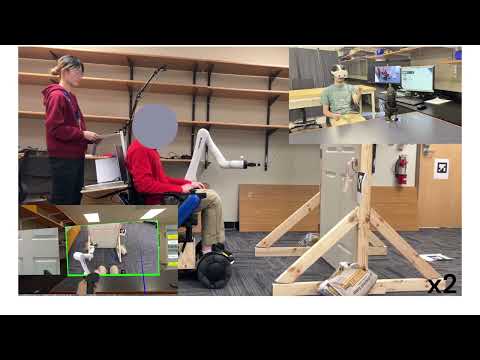
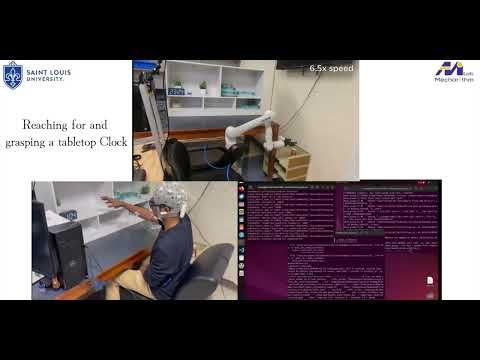
I build robots for assistance, rehabilitation, agriculture, and education in the Aerospace and Mechanical Engineering Department at Saint Louis University, where I direct the Mecharithm Lab. The work sits at the intersection of robot kinematics and control, machine learning, computer vision, and human–robot interaction, and it is carried out with the undergraduate and graduate researchers in the lab.
The Mecharithm Lab, Saint Louis University
Systems and robots for assistive, rehabilitation, agricultural, and educational purposes. Full project detail is on the lab website.
The group develops safe and efficient human–robot interaction for assistive and rehabilitation robots, human intention detection, automation of agricultural procedures, and better ways to teach robotics, mechatronics, and artificial intelligence.
This work draws on robotics, machine learning, control theory, artificial intelligence, game development, psychology, physical therapy, agriculture, and education.
Open positions are also advertised through LinkedIn and the lab website.
Contact me by email if you are:
Include your CV and links to publications, a website, or a GitHub page where applicable.
Fracture-directed steerable needles, Washington State University, advised by Prof. John P. Swensen.
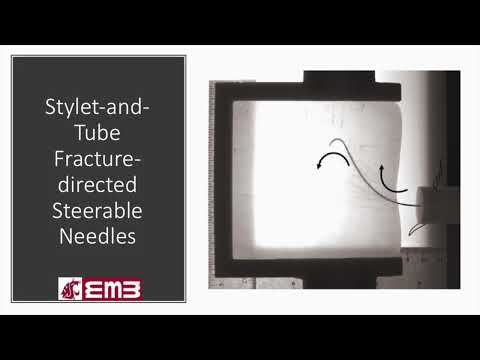
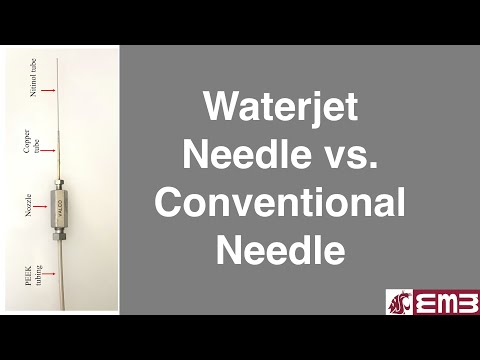
Fracture-directed steerable needles are a class of needle that reaches a target by first creating a fracture in the soft tissue and then following it with a superelastic needle, with applications in surgery and biopsy.
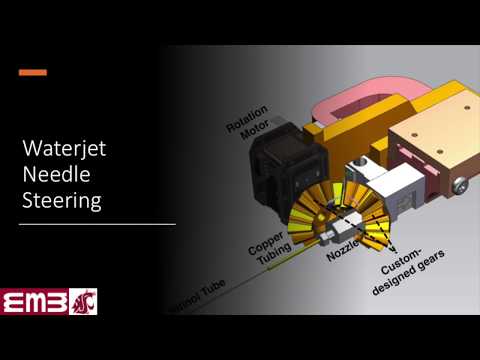
The work produced kinematic models based on screw theory, a waterjet steering system, a finite-element and closed-form model of cut depth in soft tissue, and a patent, Fracture-directed steerable needles (US 11,103,278).
Duty cycling to improve steerability and radius of curvature
Predicting depth of cut of a waterjet in soft tissue
Mechatronics engineering, University of Tabriz.
Course wikis are public and include lecture notes, assignments, and lab material.
Mechatronic system design
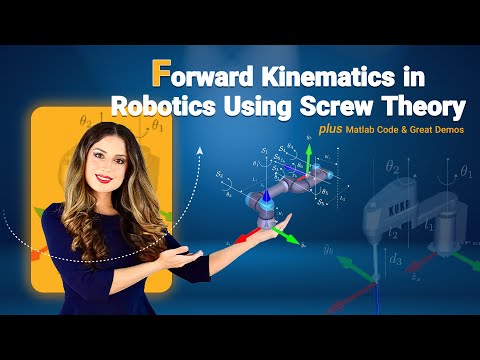
Screw theory and robot kinematics
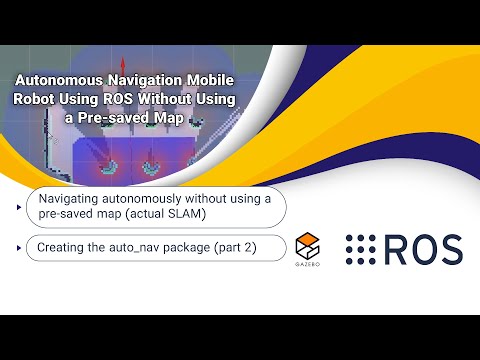
ROS and robot programming
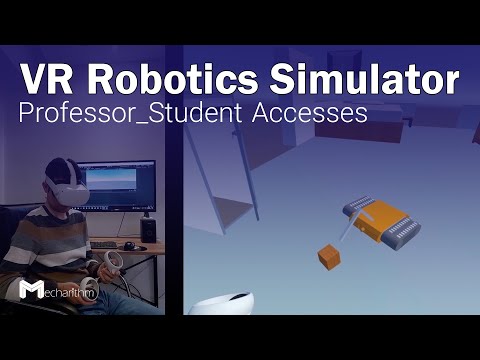
Student projects and lab demonstrations
Selected entries. [J] marks a journal article and [C] a conference paper. The complete list is on Google Scholar.
Information Fusion2026
IROS, accepted2026
BioRob, accepted2026
ISMR, accepted2026
IEEE Access2025
IEEE Access2025
IEEE 101st Vehicular Technology Conference2025
International Conference on Mechatronics, Control and Robotics2025
IEEE International Conference on Big Data2024
Computer Vision News2024
Intelligent Service Robotics2022
Journal of the Mechanical Behavior of Biomedical Materials2022
IEEE/RSJ International Conference on Intelligent Robots and Systems2020
IEEE RAS/EMBS International Conference for Biomedical Robotics and Biomechatronics2020
Medical and Biological Engineering and Computing2020
International Journal of Control2020
Journal of Medical Robotics Research2019
Disability and Rehabilitation: Assistive Technology2016
Co-investigator, NSF MRI Track 1: development of a computational system for agricultural structural modeling and analysis. PI Abigail Stylianou.
Clare Boothe Luce Professor of Robotics and Autonomous Systems, Henry Luce Foundation.
SLU Research Institute award.
Principal investigator, FIRE Grant for Undergraduate Research, WheelArm project, with co-investigators Hadi Akbarpour and Flavio Esposito. Four consecutive semesters of funding.
Co-investigator, AI for Medicine Seed Grant, bio-inspired 3D perception algorithms on neuromorphic architectures, with Hadi Akbarpour and Jafar Kafaei.
Chaifetz Fellowship, creating an entrepreneurship-themed capstone project.
Co-investigator, FIRE Grant for Undergraduate Research, implantable and wearable solutions for quadriceps rehabilitation, with principal investigator Koyal Garg.
Paid undergraduate research assistants through the SURGE program.
NSF travel grants to attend the 2024 and 2025 NSF FRR–NRI principal investigator meetings as an aspiring PI.
Luce Foundation travel grant, Clare Boothe Luce Program for Women in STEM annual conference.
SSE Excellence in Teaching Innovation Award, School of Science and Engineering, Saint Louis University. Selected through peer nomination.
Faculty Excellence Award, Student Government Association, Saint Louis University. Selected on student nominations for teaching, mentorship, research, and service.
Junior Faculty Public Works Award, Office of the Vice President for Research, Saint Louis University, for the YouTube channel Mecharithm. Selected from nearly 90 nominations.
Faculty mentor to two winning teams at the SLU New Venture Accelerator: the MORPH robotic car with structured lesson plans, and implantable and wearable solutions for quadriceps rehabilitation.
Best Pitch Award, Entrepreneurial Mindset in Robotics and Mechatronics Courses workshop, KEEN National Conference.
The Mecharithm Lab is featured in Computer Vision Magazine.
A Day in the Life of a Robotics Engineer, Society of Women Engineers blog.
Women in Computer Vision, RSIP Vision Magazine.
Cover of the MME Department and the Robotics and Autonomous Systems Initiative magazines at Washington State University.
Steerable needle research in WSU Insider.
Steerable needle research in the Daily Evergreen.
Wanda Munn Scholarship, SWE Eastern Washington Section, for academic achievement and engineering potential.
Travel awards for robotics conferences, including ISMR 2019 and BioRob 2018.
Travel grant, Society of Women Engineers annual conference (WE18).
Second rank among 42 mechatronics engineering graduate students, School of Engineering Emerging Technologies, University of Tabriz.
Top 0.2 percent of 300,000 contestants in the national mathematics and physics university entrance examination, Iran.